
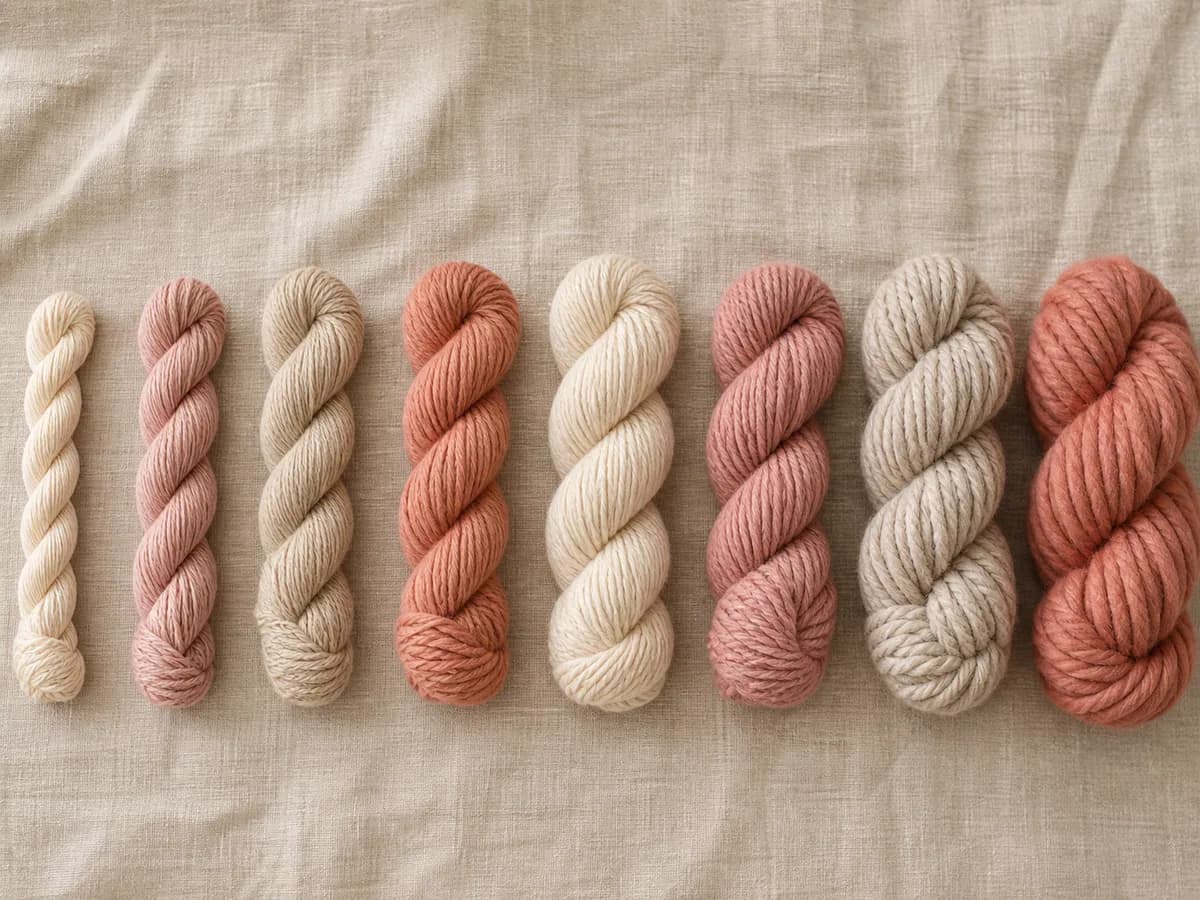
"Weight" here has nothing to do with how heavy the ball is. It means how thick the strand is — and it is the most important thing to get right when substituting one yarn for another, because it decides gauge, hook size, drape and how much yarn the project eats.
The widely used system numbers yarn categories from 0 to 7. Many US yarn bands print the number inside a small skein symbol; European and British yarns often print a familiar name instead.
The yarn weight chart
| No. | Category | Also called | Single crochet gauge, 4 in | Hook |
|---|---|---|---|---|
| 0 | Lace | Lace, 10-count thread | Varies; often worked as open lace | 1.4–1.6 mm steel; 2.25 mm regular |
| 1 | Super Fine | Sock, fingering, baby | 21–32 sts | 2.25–3.5 mm |
| 2 | Fine | Sport, baby | 16–20 sts | 3.5–4.5 mm |
| 3 | Light | DK, light worsted | 12–17 sts | 4.5–5.5 mm |
| 4 | Medium | Worsted, afghan, aran | 11–14 sts | 5.5–6.5 mm |
| 5 | Bulky | Chunky, craft, rug | 8–11 sts | 6.5–9 mm |
| 6 | Super Bulky | Super bulky, roving | 7–9 sts | 9–15 mm |
| 7 | Jumbo | Jumbo, roving | 6 sts and fewer | 15 mm and larger |
These ranges are practical guidelines rather than fixed rules. When a pattern states a gauge, the pattern wins.
What each weight is actually for
0 — Lace and thread. Doilies, filet crochet, wedding shawls. Worked with steel hooks on a scale that makes stitch counts enormous. Beautiful, slow, and not where anyone should start.
1 — Fingering, sock, baby. Socks, fine shawls, heirloom baby garments. Light fabric with excellent drape, at the cost of many hours per square inch.
2 — Sport. The quiet middle ground: lightweight garments and baby items that need to breathe. Undersupplied in most craft shops, which is why so few patterns call for it.
3 — DK / light worsted. Common for lightweight garments, baby items, and neat amigurumi without the bulk of worsted.
4 — Worsted / aran. A common choice for blankets, accessories, and beginner projects. Never assume the weight when a pattern omits it; use its gauge and fabric description to choose a yarn.
5–7 — Bulky to jumbo. Speed. A chunky blanket is a weekend; jumbo yarn is a day. The trade-off is stiffness, weight and yardage costs that climb quickly. Excellent for baskets and winter accessories, awkward for anything that needs to fold.
Two yarns in the same category can still differ. Category 4 covers a real spread — a light worsted and a heavy aran both live there and can differ by 20 percent in thickness. This is why a substitution inside the same category can still miss gauge.
How to substitute yarn safely
- Match the category number first. This gets you to the right neighbourhood.
- Compare yards per gram, not yards per ball. Divide the yardage on the label by the ball weight. Two yarns with a similar ratio are a similar thickness, whatever the label calls them. This is the most reliable comparison available to you in a shop.
- Then think about fibre. Same thickness does not mean same behaviour: cotton has no memory and grows, wool springs back, acrylic holds shape but can go limp under weight.
- Swatch, wash the swatch, then decide.
Holding two strands together
Two strands of a lighter yarn approximate a heavier one, which is genuinely useful when you have stash rather than budget. Roughly: two strands of DK behave like a bulky, two strands of fingering like a light worsted.
Swatch it — held-double fabric behaves differently from single-strand fabric of the same thickness, usually with more body and less drape.
Fibre, in one line each
- Acrylic — cheap, machine washable, endless colours, and the reason most blankets get finished. Pills, and cannot be blocked permanently unless you steam it, which flattens it forever.
- Cotton — superb stitch definition, no stretch, no memory. Ideal for amigurumi, dishcloths and market bags; heavy and unforgiving in garments.
- Wool — elastic, warm, blocks beautifully, forgives uneven tension. Use superwash for anything a baby will wear.
- Blends — usually the practical answer. Cotton-acrylic gives most of cotton's definition with some of acrylic's give, at a much lower price.